

Veranex's Biocompatibility Insights 2026
Join Ron at BI26 in Copenhagen, Denmark for Do We Really Need to Account for Bioaccumulation When Assigning a Medical Device to an Exposure Duration Category? and for the keynote on Emerging Trends in Biocompatibility.
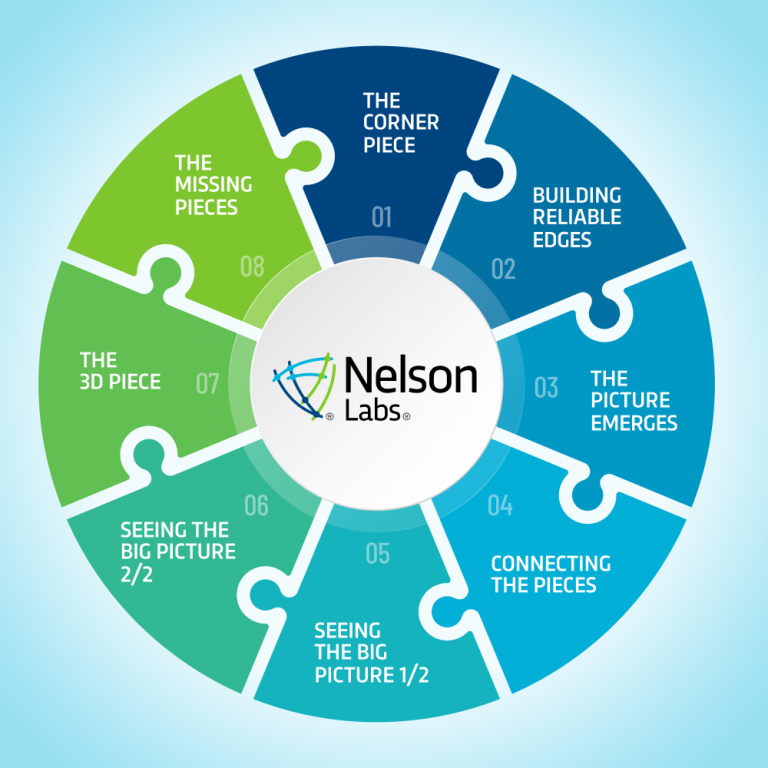
The Missing Pieces: NAMs and the Future of Biological Evaluation
Join Ron Brown and the Nelson Labs team for the closing session of The Biological Evaluation Puzzle: Building a Complete ISO 10993 Strategy 8-Part Webinar Series that looks at the growing role of New Approach Methodologies in biological evaluation. Attendees will learn where non-animal methods are gaining regulatory acceptance, where limitations remain, and how manufacturers can begin incorporating NAMs into long-term planning while continuing to support current biological evaluation requirements with established approaches.
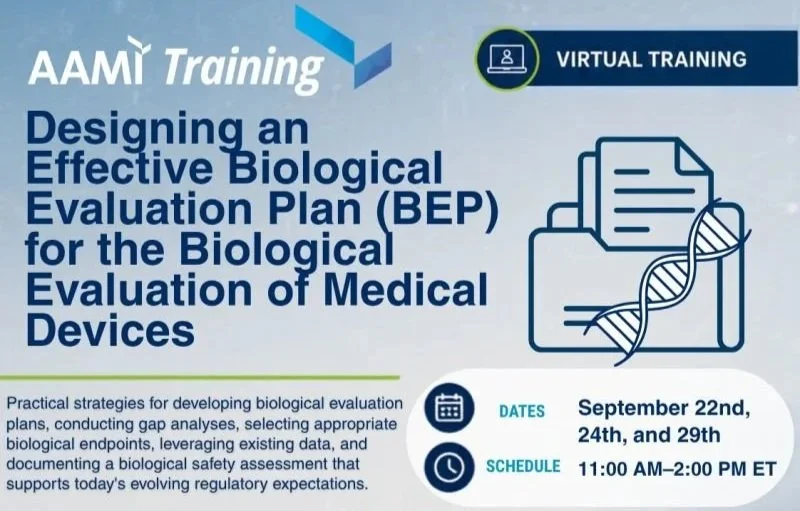
Designing an Effective Biological Evaluation Plan (BEP) Session 1
This 3 session training will be delivered via Zoom on September 22nd, 24th, and 29th from 11:00am-2:00pm Eastern.
A Biological Evaluation Plan (BEP) is a structured, written document that establishes a risk-based strategy for evaluating the biological safety of a medical device. Developing an effective BEP is an essential first step in the biological evaluation process as it serves as the blueprint for planning, documenting, and justifying the overall biological safety assessment.
Under the newly published ISO 10993-1:2025, Biological evaluation of medical devices—Part 1: Requirements and general principles for the evaluation of biological safety within a risk management process, the process for evaluating the biological safety of a medical device has evolved from a traditional “check-the-box” biocompatibility testing approach to a risk-based, science-driven strategy. The standard encourages the selection of the most appropriate and least burdensome biological evaluation strategy based on the characteristics of the device and the available scientific evidence. Consequently, there is an increasing need for BEPs that reflect current regulatory expectations while providing a clear scientific rationale for the selected evaluation strategy.
This course provides practical instruction on developing a BEP that aligns with the principles of ISO 10993-1:2025 and supports current regulatory expectations. The course integrates the framework outlined in the ISO 10993-1:2025 standard with the recommendations provided in the FDA’s 2023 Use of International Standard ISO 10993-1, “Biological Evaluation of Medical Devices—Part 1: Evaluation and Testing within a Risk Management Process” guidance document. Participants will hear directly from experienced experts who will share practical strategies on how to develop a BEP that are scientifically sound, well documented, and aligned with current regulatory expectations.
Course Outline
This online course consists of 9 modules that will be offered in three half-day classes. Each module focuses on a key component of developing an effective BEP.
Module 1 introduces the purpose of the BEP, the key elements to be included in the document, and how the BEP integrates into the risk management process.
Module 2 provides an overview of the strategy for developing a BEP, offers practical advice on how to conduct a gap analysis of biocompatibility data, and explores how to incorporate device lifecycle considerations into the evaluation.
Module 3 explains how to describe a device from a biocompatibility perspective and how to characterize the device for biological evaluation in accordance with ISO 10993-1:2025.
Module 4 discusses the importance of accurately describing the materials of construction of the device and determining when a chemical characterization of the device is needed to support the biological evaluation.
Module 5 provides instruction on how extraction strategies for biocompatibility testing and chemical characterization should be developed, justified, and documented within the BEP.
Module 6 reviews how to identify and justify the biological endpoints that should be included in the biological evaluation using the recommendations provided in ISO 10993-1:2025 and the FDA (2023) biocompatibility guidance document.
Module 7 demonstrates how to leverage existing biocompatibility data to support the biological evaluation and document this rationale in the BEP.
Module 8 addresses special topics, including preparing a BEP for combination devices, devices in contact with intact skin, and the need for toxicokinetic studies.
Module 9 summarizes the concepts presented throughout the course and highlights the major differences between the expectations for BEPs under ISO 10993-1:2018 and the updated ISO 10993-1:2025 standard.
Faculty
The course was developed by Ron Brown, a former FDA toxicologist and current Director and Principal Toxicologist at Risk Science Consortium, LLC (RSC). Instruction is provided by Beau Rollins, RM(NRM) CISS EO, internationally recognized biocompatibility expert and Principal Consultant at Intrinsic Medical Group, LLC and Bipin Biju Zachariah, PharmD, MS, Research Fellow at Risk Science Consortium.
Target Audience
This course is designed for biocompatibility specialists, medical device toxicologists and chemists, regulatory affairs professionals at medical device firms, consultants, and study directors/representatives from preclinical contract research organizations (CROs).
There are no prerequisites for the course. However, Association for the Advancement of Medical Instrumentation (AAMI) recommends participants have a basic understanding of the biocompatibility principles and the ISO 10993 series of standards.
Materials
The registration fee includes:
A copy of ANSI/AAMI/ISO 10993-1:2025,
A copy of the FDA (2023) Biocompatibility Guidance, and
An enotebook containing all presentation materials with note-taking capability.
North American Biocompatibility Summit (NABS)
Join Ron at NABS 2026 for Do We Really Need to Account for Bioaccumulation When Assigning a Medical Device to an Exposure Duration Category?
Biocompatibility Meet-Up Minneapolis
Join Ron and other biocompatibility colleagues for an informal meet up at Day Block Brewing.